
When your toilet gurgles every time the washing machine drains and the shower backs up for no reason you can point to, the trouble usually isn't inside the house at all. Coopers Plumbing offers sewer line services in and around Asheville, NC, for homeowners dealing with recurring backups, foul smells in the yard, and pipes that have been in the ground longer than they've owned the place. Finding out what's actually happening down there comes first, and we won't recommend digging until we know.
Homeowners across Asheville, NC, and the wider Western North Carolina region rely on Coopers Plumbing, a family-owned, locally run company that handles sewer line work from its Asheville base. In business since 1999 and holding a P-1 Residential and Commercial Master License, we diagnose underground sewer problems and handle repairs, replacements, blockages, root intrusion, and damaged or deteriorating sewer pipes.
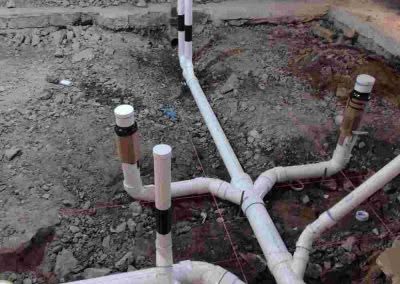
The pattern gives it away. A drain clogs, somebody clears it, and everything's fine for a few months. Then it happens again. Then the gap between calls gets shorter, and eventually you're dealing with sewage in your basement or a patch of grass that stays suspiciously green all summer.
Roots go looking for water, and a sewer line is the wettest thing in your yard. They can't break into solid pipe, but they don't have to. Old clay lines have joints every few feet, cast iron corrodes and cracks, and any hairline opening lets in enough moisture for a root hair to find its way through. Once inside, that root sits in nutrient-rich water and grows into a mass that catches everything flushing past it. A maple planted 40 years ago over a line laid in the fifties is a common story around here.
Getting a camera down the line tells us where the intrusion is, how far it extends, and what shape the pipe is in on both sides. Cutting the roots out with a mechanical auger restores flow, and that's the right call when the pipe itself is sound. When the camera shows collapsed sections or separated joints, cutting roots only buys time, so we'll talk through replacing that run instead. Spot repairs work when the damage is contained to a stretch or two.
What you get afterward is drains that behave, a yard that smells like a yard, and no more scheduling your life around the next backup. Knowing the condition of the whole line also means you can plan for the rest of it rather than getting surprised by it on a holiday weekend.
Here's the range of work we take on when the trouble is out past the foundation.
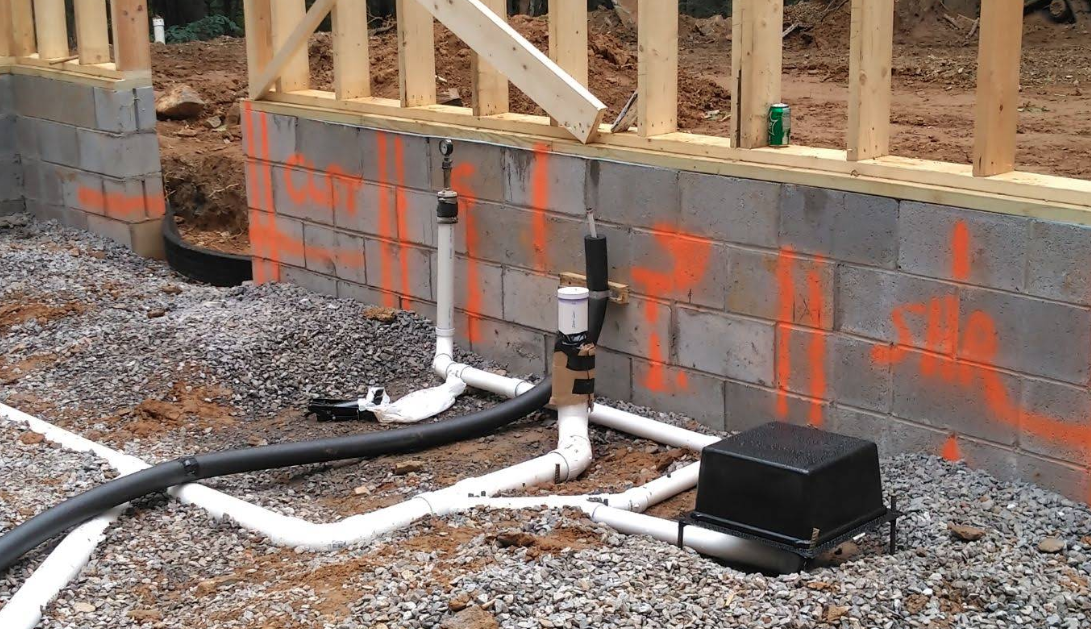
Clay, cast iron, and orangeburg all fail differently, and knowing which one is under your yard shapes the whole approach. Cracked joints, scaling, and sagging sections are clearly visible on camera before they become a full blockage. Addressing the bad stretch early keeps the rest of the line from taking on more load than it should.
Guesswork gets expensive when the pipe runs under a driveway or a mature tree, so we look before anybody picks up a shovel. Camera work shows the depth, direction, and exact trouble spot, narrowing the dig to a few feet rather than a trench across the whole yard. Homeowners get to see the footage, too, so you know what you're paying to fix.
Clearing the same clog three times in a year suggests a structural issue is causing it. Tracking down the underlying reason takes longer than snaking the line, though it's the only thing that actually ends the cycle. Plenty of plumbing companies will keep coming back for the easy call, and we'd rather solve it once.
Roots, grease buildup, and the occasional item that should never have gone down the toilet account for most clogs. Mechanical clearing handles the obstruction, and a follow-up camera pass confirms the pipe is actually clear rather than just flowing again. Our plumbers will also point out which trees in your yard are likely to cause trouble down the road.
Localized damage doesn't always require tearing out the entire run. Sewer line repair on a single failed section costs a fraction of a full replacement, and a licensed plumber should be able to tell you honestly which situation you're in. Permits and inspections are handled on our end when required.
Collapsed pipe, separated joints, and lines that have bellied out past saving mean it's time for new material. Sewer line replacement runs modern polyvinyl chloride (PVC) that roots can't get into, unlike the clay they got into. Restoring the yard afterward is part of the job, and we keep the disruption as contained as the layout allows.
Yearly camera checks catch root growth and scaling while they're still minor, especially on older lines. Sewer line maintenance costs very little compared to emergency work at eleven o'clock on a Sunday. Homes with big trees near the line benefit the most from staying ahead of it.
Water that runs clear after a minute but comes out rusty first thing in the morning is a classic sign of corrosion sitting in the lines overnight. Nobody wants to hear that the whole system needs work, so we'll never push it on you before it's warranted. When the time comes, our repiping services are planned around your schedule, and we'll walk the house with you first so you know exactly what we're touching.
The pressure relief valve on top of your tank is a small part with a big job, and many people have never noticed it. If it's weeping or crusted over, that's worth a look sooner rather than later. We cover the entire unit in our water heater services, from the top valves and connections to the sediment at the bottom of the tank.
Real estate deals fall apart over sewer surprises more often than people realize, usually because nobody checked until after closing. A camera run takes less than an hour. Sewer camera inspections during the inspection window give you something concrete to negotiate with, or peace of mind that the line under your future yard is in decent shape.
Garbage disposals get blamed for many clogs they didn't cause, though they do contribute when people treat them like a trash can. Coffee grounds, eggshells, and anything fibrous belong in the bin. Drain cleaning removes what's already built up, and we're happy to tell you what to avoid putting down the drain to keep it clear longer.
We show up with the truck stocked for the common stuff, which means most calls get finished on the first visit instead of turning into a parts run and a reschedule. That matters when you've already taken time off work to be there. Our plumbing repairs cover leaks, worn fittings, failing valves, and the general wear and tear that comes with a house as it ages.
Shutoff valves under sinks and behind toilets tend to be the forgotten part of the job, and in older homes, they're often frozen solid or slowly seeping. Replacing them while everything's already apart costs very little and saves a headache down the road. That's standard practice for us for plumbing fixture installation, not an upsell we spring on you halfway through.
Frozen pipes are the local version of this problem, and they don't announce themselves until things thaw and the water finds the split. If a faucet stops running on a cold morning, that's your warning. Emergency plumbing calls spike around here every hard freeze, so reach out early rather than waiting to see what happens.
Sewer work involves digging up your property, so it matters who you hire.
Our P-1 Residential and Commercial Master License, along with years in the trade, means we've seen what's buried under most of these neighborhoods.
Local ownership has stayed put while investment firms bought out plumbing contractors across the country, and that's why the person quoting your job is the same one standing in your yard.
Materials and equipment are chosen for durability rather than margin, the same standard behind the Rheem and Bradford White units we install elsewhere in the house.
Our workmanship is covered by a one-year labor warranty, and our plumbing company is happy to review the additional coverage available for certain work.
Watch for repeated backups, slow drains throughout the house, sewer smells, gurgling toilets, or soggy spots in the yard. Those signs can point to roots, a blockage, a damaged pipe, or an older sewer line that's starting to break down.
A smaller repair may take a day, while a larger sewer line replacement can take several days. The timeline really depends on where the damage is, how deep the pipe is buried, and how much of the line needs attention.
A repair can make sense when the problem is limited to one section and the rest of the line is still in decent shape. If the pipe has widespread damage, heavy root intrusion, or keeps failing in different spots, replacement may save you from dealing with the same mess again.
Tree roots, old piping, shifting soil, grease buildup, corrosion, and items that shouldn't go down the drain can all cause sewer trouble. In older Asheville homes, age alone can also be a major factor, especially when underground piping has been in place for decades.
Stop using toilets, sinks, showers, and appliances that send water down the drain so you don't make the backup worse. Then call a plumber, especially if sewage is entering the house or multiple drains are backing up at once.
FAQs reviewed by Chris Cooper, founder and owner of Coopers Plumbing, a licensed plumber in Asheville, NC.
Recurring backups don't fix themselves, and the pipe isn't getting any younger. Reach out, and we'll get a camera down there and tell you exactly what you're dealing with.
Business Name: Coopers Plumbing
Address: Asheville, NC, 28804
Phone: 828-254-0383
Business Hours:
Mon - Fri: 9:00 AM to 5:30 PM
Sat-Sun: Closed
24 Hour Emergency Service Available
As a Master Licensed contractor, we stand behind our workmanship with a 1-year labor warranty. Ask us about additional warranties.